

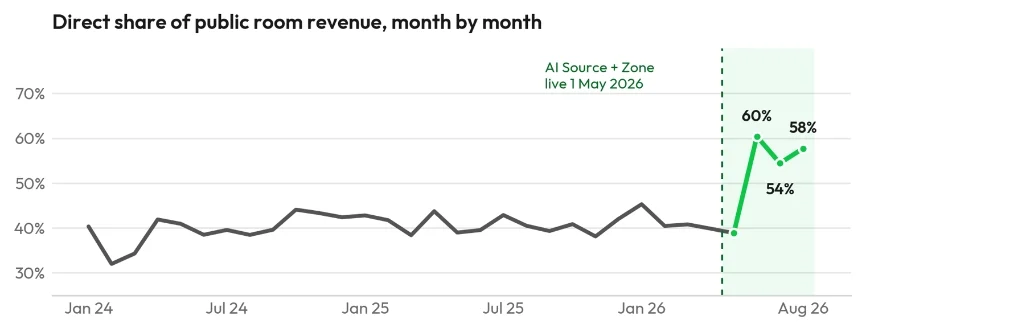
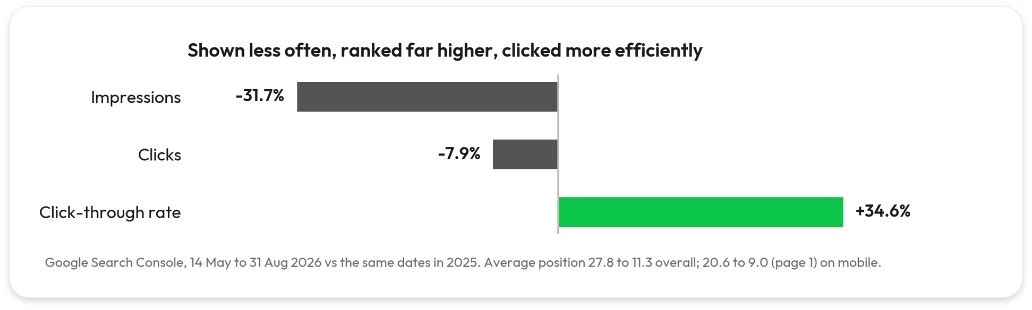
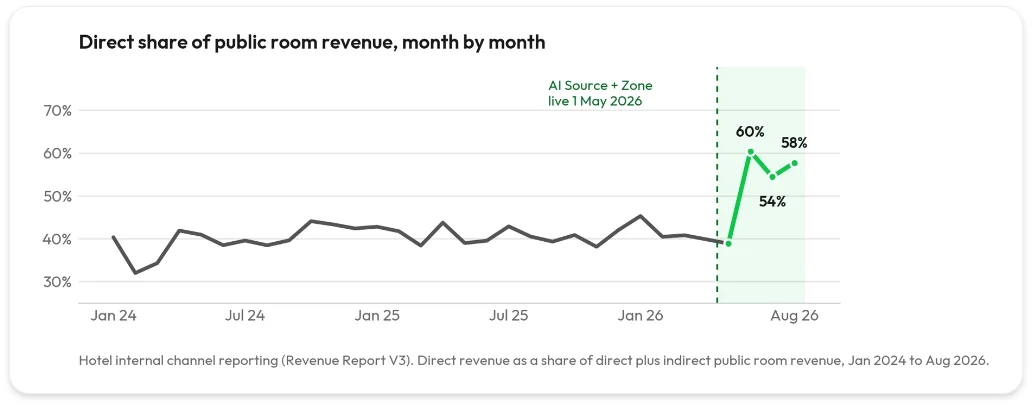
- Aligned to the activation of AI Source and Zone on 1 May 2026 in order to isolate and measure their impact. Unless stated otherwise, all comparisons are against the equivalent prior period, 1 May to 31 August 2025. Google Search Console data collection on this property began on 14 May 2025, so like for like search comparisons use 14 May to 31 August in both years.
- Driving Direct Demand (OmniHyper case study), measurement period August 2023 to January 2026; sourced from SEMrush Rank Tracker, Google Search Console, Google Analytics 4 and brand attribution reports.
- Google Trends, “hotel perth” and “accommodation perth” (Australia), indexed monthly search interest, April 2025 to August 2026. Publicly reproducible.
- Horwath HTL, Australia Capital City & Key Markets Hotel Market Outlook & Insights, June Quarter 2026 edition, RevPAR performance snapshot YTD June 2026 (STR data) and Perth Tourism Region supply outlook.
- Hotel internal channel reporting, provided by the hotel’s revenue management team, September 2026. Occupancy and ADR are the monthly averages for May to August in each year. Hotel / brand internal.
- Hotel owners presentation, February 2026: search performance last 90 days and web direct revenue performance, November 2025 to January 2026 against November 2024 to January 2025.
- Google Search Console (hotel website property), 14 May to 31 August 2026 against 14 May to 31 August 2025. Average position is the impression weighted average of the device level rows in the export. The brand has direct access to this property.
- OmniHyper programme agreement: AI Source (Hotels) and Zone (Hotels), both commencing 1 May 2026, alongside the continuing Helium programme.
- AI Source monthly reports (Mae, OmniHyper AI Digital Marketing Agent) for June, July and August 2026, brand performance analyses across ChatGPT, Perplexity, Gemini and Google AI Mode. June is a ChatGPT only measurement and July and August are four platform means, so the two bases are not directly comparable; the gap between named and unnamed mentions is read within each dataset.
- AI Source monthly reports (Mae, OmniHyper) for July and August 2026, including the August correspondence log and the verified rendered crawl of the residential conferences page.
- Zone (Hotels) programme documentation, OmniHyper: keyword research, intent tracking, on page optimisation and the 136 channel local distribution network integrated with Google Business Profile.
- Rank Tracker keyword portfolio via the OmniHyper dashboard, 1 May to 31 August 2026: 66 tracked keywords, 60 ranking, net Google change of 86 positions.
- Google Search Console, Performance, Generative AI features (beta), 18 May to 31 August 2026. The comparison period was not measured, as the report did not exist. The brand has direct access.
- Google Analytics 4 (hotel website property), 1 May to 31 August 2026 against the prior year: session primary channel group, session source and event exports. GA4 uses a last click model. The brand has direct access.
- Brand attribution reports (hotel website and Google Maps), via the hotel’s reporting, and Google Analytics 4, 1 May to 31 August 2026 against the prior year. The brand has direct access to both.
- Google Business Profile, Performance, May to August 2026 against May to August 2025. Google’s own reporting. The brand has direct access.
- Hotel revenue management team, correspondence with OmniHyper, September 2026: crew and corporate volumes, OTA channel strategy and effective sellable inventory. Non-public room nights are derived from occupancy and sellable inventory, less public direct and indirect room nights.
Investment, discovery and early results
AI Source and Zone added to Helium on 1 May 2026. Month 4 of a 12 month programme; in OmniHyper’s experience, AI search can take 6 to 9 months to show clearly in commercial results. May to August 2026 against May to August 2025.


